Regatta History
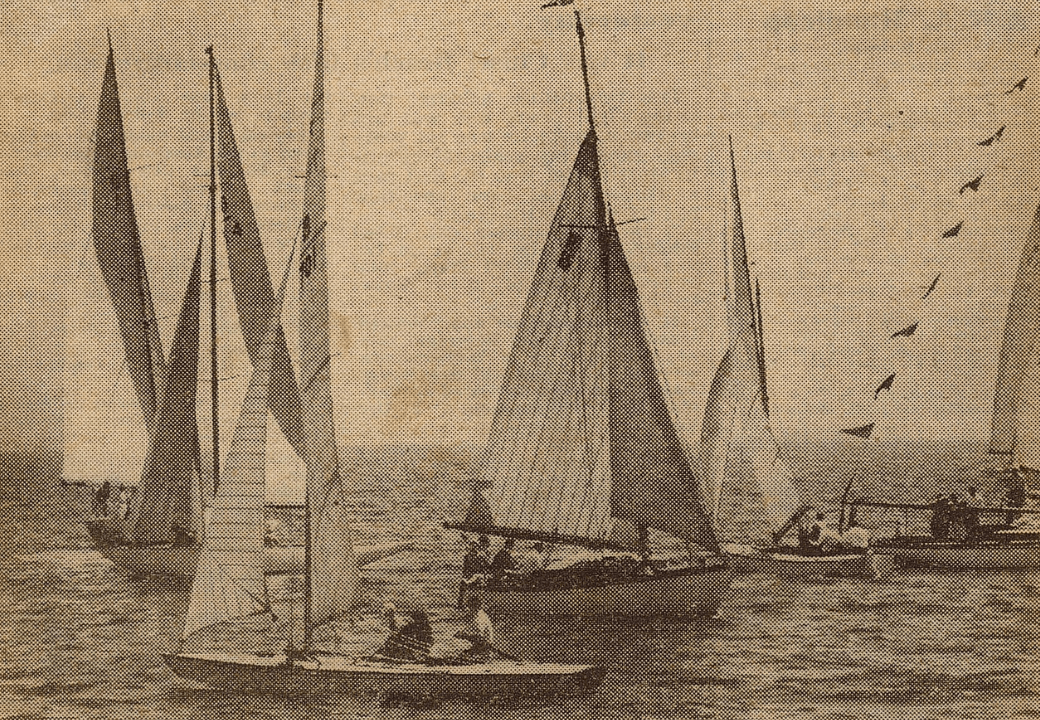
For more than 180 years, Festival of Sails has been bringing sailors together on the waters of Corio Bay, making it Australia’s oldest continuous sporting event and one of the nation’s most enduring sporting traditions.
The event traces its origins to 1844, when local sailing enthusiasts gathered to compete on Geelong’s waterfront. Established decades before the Melbourne Cup, The Ashes and the Victorian Football League, the regatta has endured through generations of social, economic and technological change, continuing uninterrupted through both World Wars and the 2020 pandemic, while remaining true to its spirit of competition, camaraderie and community connection.
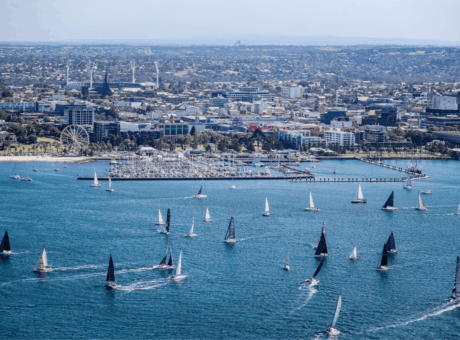
As sailing grew in popularity across Australia, so too did Festival of Sails. What began as a local regatta developed into a nationally recognised event, attracting sailors from across the country and eventually competitors from around the world. Today, it is recognised as the largest keelboat sailing regatta in the Southern Hemisphere, welcoming hundreds of yachts and thousands of competitors each year.
One of the event’s most enduring traditions is the Melbourne to Geelong Passage Race, which marks the beginning of Festival of Sails each year. Competitors navigate the varied conditions of Port Phillip before arriving in Corio Bay, combining tactical sailing, teamwork and endurance with a spectacular arrival on Geelong’s waterfront.
While sailing remains the foundation of Festival of Sails, the event has continued to evolve. What was once purely a regatta has grown into a major waterfront celebration that brings together competition, community and entertainment on and off the water. Live music, family activities, hospitality experiences and the vibrant Regatta Village now complement the world-class racing, creating a unique atmosphere enjoyed by sailors, spectators and visitors alike.
Today, Festival of Sails continues to honour its rich heritage while embracing the future. Hosted by Royal Geelong Yacht Club and supported by long-standing partners including the Victorian Government and the City of Greater Geelong, the event remains a showcase of sporting excellence, community spirit and Geelong’s connection to the water.
EVENT TIMELINE
1844
The first Geelong regatta is held, establishing what would become Festival of Sails.
1859
The Geelong Yacht Club is established.
1861
The event predates the first Melbourne Cup by almost two decades.
1882
The event predates the first Ashes Test series.
1897
The event predates the first VFL (now AFL) matches.
1900s
The regatta continues to grow as one of Australia’s premier sailing events.
1914-1918
The regatta continues throughout World War I, demonstrating the resilience of Geelong’s sailing community.
1924
Geelong Yacht Club is awarded the Royal Warrant by His Majesty King George V, earning the title of Royal Geelong Yacht Club.
1939-1945
The regatta continues throughout World War II, cementing its status as Australia’s oldest continuous sporting event.
1970s-1980s
Growing participation cements Geelong’s reputation as a major sailing destination.
1994
The Geelong Regatta celebrates 150 years of racing on Corio Bay.
1997
The event expands beyond racing, merging with the Geelong Waterfront Festival to become Festival of Sail (later Festival of Sails).
2000 – 2010s
Festival of Sails continues to attract national and international competitors and tens of thousands of visitors.
2020
Festival of Sails is successfully staged just weeks before the COVID-19 pandemic impacts major events across Australia and the world.
2021
The festival adapts to changing restrictions and proceeds with a limited program, continuing a tradition that has endured for generations. The new wave attenuator Wangim Walk is in use for the first time.
2022
Festival of Sails returns with a full sailing program, welcoming competitors back to Corio Bay.
2023
Festival of Sails celebrates 180 years of sailing tradition, marking a major milestone in the event’s history.
2026
The Victorian Sailing Centre is used at Festival of Sails for the first time after opening in 2025, enhancing facilities for competitors, officials and major regattas.
2027
Festival of Sails celebrates its 184th year as Australia’s oldest sporting event and the Southern Hemisphere’s largest keelboat sailing regatta.